
Ahojte bikeri,
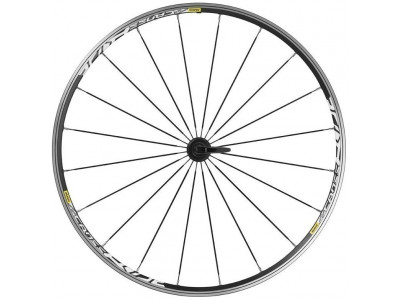
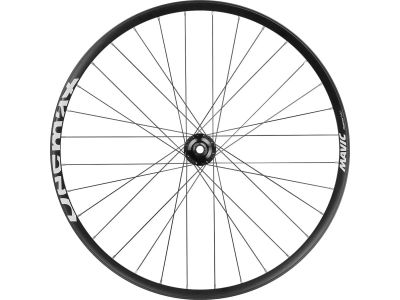
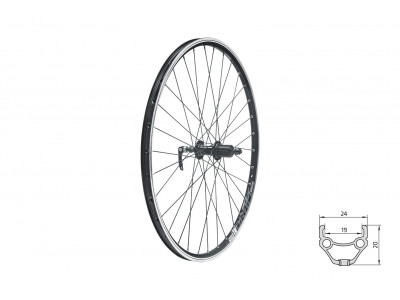
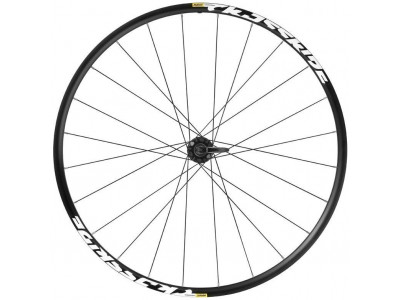
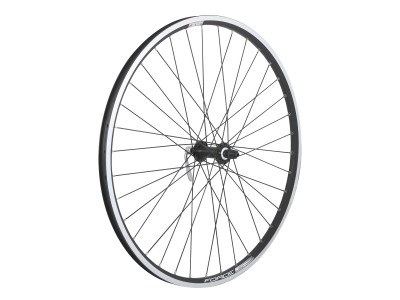
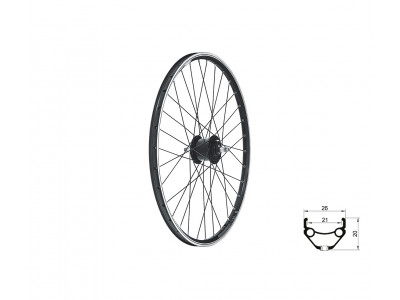
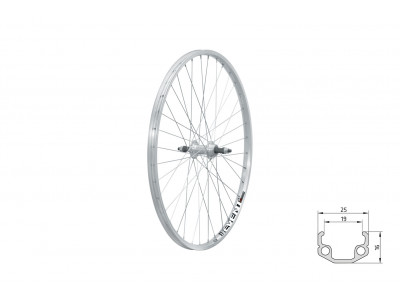
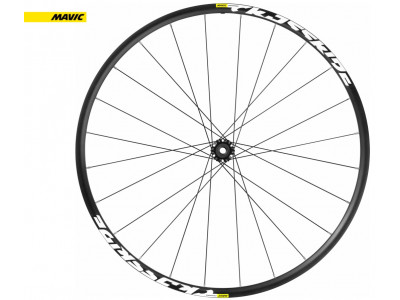
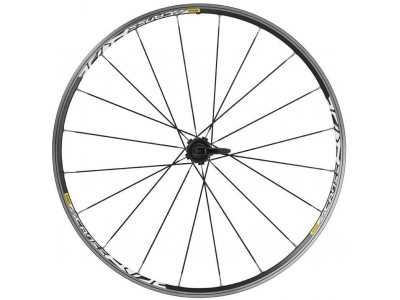
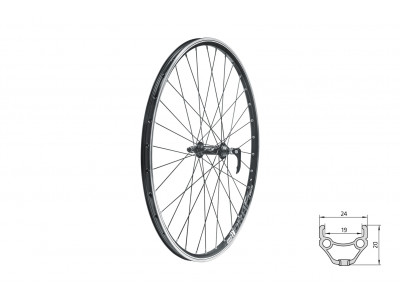
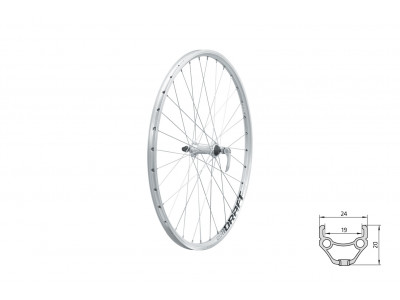
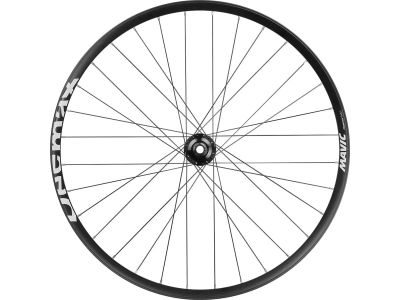
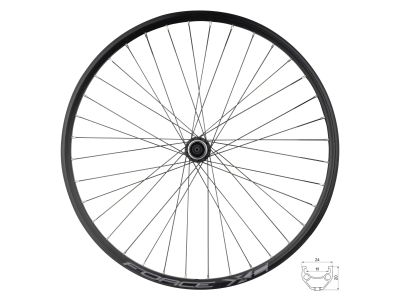
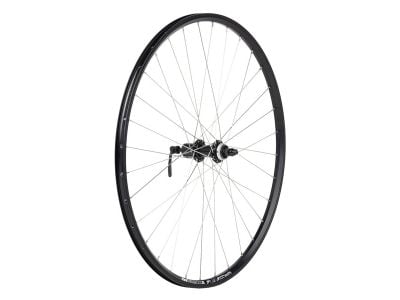
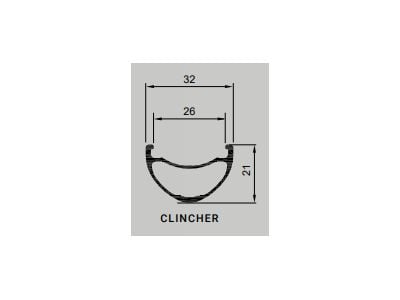
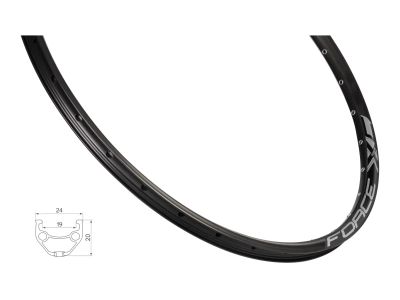
Pred zaciatkom novej sezony by som si chcel obstarat nove 26" MTB kolesa. Potreboval by som kolesa pre diskove brzdy s uchytenim kotuca Center Lock. Moj cenovy strop je cca. 250 EUR. Oslovili ma tieto:
Priemer na fóre je dôležitý! Tí skutoční športovci bicyklujú a ostatný čiže väčšina čo práve číta moju teóriu sú internetový pivný cyklisti kde väčšina rozmýšla že kolko pív si dá keď sa odkolečkuje okolo bytovky.
vie niekto vahu kolies ktore ma seriovo Lector 3 r.2017?
na kuchynskej vahe som navazil predne 2.1kg, zadne 2.68kg - po odcitani hmotnosti hole kolesa by mali mat okolo - predne 1.13kg, zadne 1.26kg. co sa mi zda vela. navyse nieje moznost z toho spravit bezduse - ktore by som rad vyskusal.
otazka znie - ak by sa mi este chcelo minut nejake € ake kolesa? (29") po akej vahe sa pozerat aby nieco vydrzali - jazdim sice dost asfaltu ale aj rozbite lesne cesty plne sutrov a obcas aj rozbite chodniky. teraz su tam rafky rodi black rock vnutorna sirka rafku 21mm a vaha podla netu 580-620g (vsade inak) - uzsi by som nechcel, mozno este o 1-2mm sirsi. naboje bohuzial neviem co su zac - okrem toho ze su loziskove. rozmyslam aj nad moznostou vymenit len rafik (pripadne aj vyplet ak by nesedela dlzka) a niple.
ma nad zmenou kolies vobec zmysel uvazovat? - prezil by som aj bez bezdusi, bolo by tu usporu hmotnosti aj realne citit? - nejazdim maratony, ale bavia ma celodenne dlhe vyjazdy.
Ľudia, aká váha kolies na MTB je ešte prijateľná - 29 palcov? (Na mojom bicykli od výroby sú Mavic Crossride FTS-X a tie majú 2090g/pár, tak nejak)... Na XC za 250 - 300 eur. Ale to je maximálne maximum A asi skôr dať zapliesť ako z fabriky, či?
Myslím, že v tej cene sú v pohode aj tieto http://www.suncycle.sk/sk/produkt/mtb-zapletane-kolesa-dt-swiss-x1900-spline-29/8458, možno aj nejaké shimano, no osobne som skôr za DT, prípadne aj niečo iné, mnohí asi napišú, že to nie je bohvičo a že to je základ, no pokiaľ by si chcel skladať, tak neviem či by si niečo zaujímavé v tej cene zložil...možno na podobnej úrovni. Nemám na nich moc najazdené, no zatiaľ sa mi zdajú ok
Realne budu mat cca 1900g a kvoli 200 gramom nema vyznam investovat 250 eur do novych kolies. Osobne by som nekupoval nove kolesa ak by som na nich memal usetrit aspon 300g. Aj to by som hodne zvazoval ci vobec. Ak by som mal kolesa 2090 g tak upgrade na 1700g a menej, inac nie. Tot moj nazor
Hack3r možno máš pravdu, že to za to nestojí, iba ak by mal tie svoje kolesá v horšom stave a zaslžili by si výmenu, 1700 by boli určite lepšie, no za 2 násobok jelho limitu, to by som už asi niečo skladal, za nejakých 400 by sa dalo poskladať niečo schopné myslím, no aj tak je to cez Hazardov rozpočet
a ma niekto realnu skusenost ci je naozaj ten hmotnostny rozdiel na kolesach citit ? oplati sa do toho investovat? mam ponuku na novatec par 1700g tusim flow trail. len sirka rafika je len 20mm co sa mi na bezdusu moc nepaci koli nizsiemu tlaku.
I can't believe that people keep arguing that rotating mass climbs slower than non-rotating mass under the same power. When you are working against gravity, mass is mass, it doesn't matter if it rotates or not. The idea that micro-accelerations due to pedal force fluctations make a difference in the overall picture is a strawman. During pedal force fluctuations, accelerations are decelerations cancel out. All that really matters is average power output vs. gravity.
Since Ras11 complained that no math has been offered, I decided to set up a model to simulate the accelerations/decelerations due to pedal fluctuations. The equations and variable values were taken from the Analytic Cycling web page.
Pedaling force: The propulsion force (from pedaling) was modeled as a sinusoidal. Since it is assumed average power is constant, the nomimal drive force will vary inversely with velocity. So, the propulsion force is modeled as:
Fp = (P/V)(1+Sine(2RT))
Fp = Propulsion force (pedaling)
P = Average power
V = Velocity
R = Pedaling revolution rate
T = Time
(Note: The angle in the sine term is double the pedal revolution rate, since there are two power strokes per revolution)
The drag forces on the rider are aerodynamic drag, rolling resistance, and gravity. These three terms together are:
Fd = (1/2)CdRhoAV^2 + MgCrrCosine(S) + MgSin(S)
Fd = drag force
Cd = Coefficient of aerodynamic drag
Rho = Density of air
A = Frontal area
M = total mass of bike and rider
Crr= Coefficient of Rolling Resistance
g = Acceleration of gravity
S = Slope of road
The total force is thus:
F = Fp - Fd
From Newton's second law, the equation of motion is:
dV/dt = F/I
I = Inertia
Because there is both rotating and non-rotating mass, total mass and total inertial will not be the same. Because mass at the periphery of the wheel as twice the inertia as non-rotating weight, the total mass and inertia of a bike are:
For this simulation, the pedal revolution rate was selected as 540 deg/sec. (90 rpm cadence)
To solve this equation, a 4th order Runge-Kutta numerical differentiation was set up using an Excel spread sheet. Step size was selected at 0.01 sec., and the initial Velocity was 1 m/sec. The solution was calculated for 3 cases of equal total mass, but different distributions of static and rotating mass, calculated over a 200 second period, by which time each case had reached steady state. As expected, the velocity oscillated with the pedal strokes. The average, maximum, and minimum velocities during the oscillilations during stead state were:
Case 1:
Ms = 75 kg, Mr = 0 kg (0% rotating mass)
Average Velocity: 7.457831059 m/s
Maximum Velocity: 7.481487113 m/s
Minimum Velocity: 7.434183890 m/s
Speed fluctuation: 0.047303224 m/s
Case 2:
Ms = 70 kg, Mr = 5 kg (5.33% rotating mass)
Average Velocity: 7.457834727 m/s
Maximum Velocity: 7.480016980 m/s
Minimum Velocity: 7.435662980 m/s
Speed fluctuation: 0.044354000 m/s
Case 3:
Ms = 65 kg, Mr = 10 kg (10.67% rotating mass)
Average Velocity: 7.457837584 m/s
Maximum Velocity: 7.478718985 m/s
Minimum Velocity: 7.436967847 m/s
Speed fluctuation: 0.041751139 m/s
These results agree very strongly with the solution on the Analytic Cycling web page, which predicted an average speed with constant power of 7.46 m/s (16.7 mph)
The results show that as expected, the smaller the percentage of rotating mass, the greater the magnitude of the velocity oscillations (which are quite small). But a more interesting result is in the average speed. As the amount of rotating mass decreased, the more the average velocity _decreased_, not increased (at steady stage). This result is actually not unexpected. The drag forces are not constant, but vary with velocity, especially aerodynamic drage (Because aerodynamic drag increases with the square of velocity, power losses are increase out of proportion with speeds - so, for example, aerodynamic losses at 20 mph are 4 times as much as they would be at 10 mph). Because speed fluctuates as the propulsion force oscillations, in the cases of the low rotating mass, the maximum peak speeds reached are higher than for the cases with the high rotating mass. This means that when a lower percentage of rotating mass there will be greater losses during the speed peaks. Because of the total drag losses will be greater over the long run, the greater momentary accelerations with lower rotating mass actually results in a lower average speed.
To see what happens at a steeper slope, which will have a lower speed (and presumably larger speed oscillattions), I ran the model again with a 10% (5.7 deg.) slope. Here are the results:
Case 1:
Ms = 75 kg, Mr = 0 kg (0% rotating mass)
Average Velocity: 3.217606390 m/s
Maximum Velocity: 3.272312291 m/s
Minimum Velocity: 3.162540662 m/s
Speed fluctuation: 0.109771630 m/s
Case 2:
Ms = 70 kg, Mr = 5 kg (5.33% rotating mass)
Average Velocity: 3.217613139 m/s
Maximum Velocity: 3.268918539 m/s
Minimum Velocity: 3.165997726 m/s
Speed fluctuation: 0.102920813 m/s
Case 3:
Ms = 65 kg, Mr = 10 kg (10.67% rotating mass)
Average Velocity: 3.217618914 m/s
Maximum Velocity: 3.265921742 m/s
Minimum Velocity: 3.169047012 m/s
Speed fluctuation: 0.096874730 m/s
This data follows the same pattern as above. The speed oscillations (micro-accelerations) are greater with the lower rotating mass, but the average speed is also slightly lower with lower rotating mass. So next time you want to claim that lower rotating mass allows faster accelerations, remember too that the greater speed fluctuations (due to greater accelerations) will also results in greater energy losses due to drag forces.
But, in reality, the differences in speed fluctions and average speeds are really very small between all these cases. For all practical purposes, when climbing, it is only total mass that matters, not how it is distributed.
Mam na jednom biku kolesa povodne co maju cca 2,1 kg a casom som dokupil druhe co maju cca 1,75. Rozdiel v akceleracii obrovsky. Ale ked je v strmom vyslape napr. zopar korenov, tak s tymi tazsimi sa cez tu pasaz lepsie prechadza, mensia strata rychlosti, mensi boj. Aspon taky bol moj pocit z toho.
och som myslel ze jednoznacne lahke kolesa - len na aku vahu ist aby sa to casto neservisovalo a ci ma vyznam kupovat cele nove kola za stovky € koli 300-400g.
ale ono - lahke kolesa - lepsia akceleracia, lahsi bike / tazke kolesa - zotrvacnost, odolnost hmm
Zasielanie zaujímavých akcií a noviniek emailomZasielanie zaujímavých akcií a noviniek emailomZasielanie darčekov a možnosti výhodnejšieho nákupuZasielanie Akcie týždňa
Zvoľ si, prosím, o ktoré informácie máš záujem:
Raz za týždeň / mesiac posielame súhrn toho čo pribudlo na MTBIKERi. Nikdy neposielame reklamu ani iný spam.
K narodeninám a meninám posielame menší darček s možnosťami výhodnejšieho nákupu a občas posielame email s akciami na tovar, ktorý Ťa môže zaujímať.
Raz za týždeň posielame súhrn našej Akcie týždňa a občas posielame email o špeciálnych akciách a novinkách v našom e-shope.
Dávam spoločnosti MTBIKER community s.r.o., so sídlom 225, Hrádok 916 33, Slovensko, IČO: 52 770 222, súhlas na zasielanie bezplatných informácií podľa špecifikácie uvedenej vyššie a so spracúvaním mojich osobných údajov na tento účel. Môj súhlas je dobrovoľný a beriem na vedomie, že mám právo ho kedykoľvek odvolať v sekcii Nastavenia e-mailov. Zároveň potvrdzujem, že som sa oboznámil(a) s informáciami v sekcii Ochrana súkromia a osobných údajov.
check_circle
error
MTBIKER používa cookies
Súbory cookies používame na zabezpečenie funkčnosti webu a na personalizáciu obsahu. S Tvojim súhlasom ich budeme používať na meranie užívania webovej stránky, k personalizácii a na zobrazenie relevantných reklám a informácií. Ak nám udelíš súhlas, môžeš ho zrušiť alebo môžeš zmeniť svoje preferencie v sekcii Nastavenia cookies. Ak nesúhlasíš s ukladaním cookies, môžeš ich odmietnuť. Viac o cookies si môžeš prečítať v sekcii Ochrana súkromia a osobných údajov.
na kuchynskej vahe som navazil predne 2.1kg, zadne 2.68kg - po odcitani hmotnosti hole kolesa by mali mat okolo - predne 1.13kg, zadne 1.26kg. co sa mi zda vela. navyse nieje moznost z toho spravit bezduse - ktore by som rad vyskusal.
otazka znie - ak by sa mi este chcelo minut nejake € ake kolesa? (29") po akej vahe sa pozerat aby nieco vydrzali - jazdim sice dost asfaltu ale aj rozbite lesne cesty plne sutrov a obcas aj rozbite chodniky. teraz su tam rafky rodi black rock vnutorna sirka rafku 21mm a vaha podla netu 580-620g (vsade inak) - uzsi by som nechcel, mozno este o 1-2mm sirsi. naboje bohuzial neviem co su zac - okrem toho ze su loziskove. rozmyslam aj nad moznostou vymenit len rafik (pripadne aj vyplet ak by nesedela dlzka) a niple.
ma nad zmenou kolies vobec zmysel uvazovat? - prezil by som aj bez bezdusi, bolo by tu usporu hmotnosti aj realne citit? - nejazdim maratony, ale bavia ma celodenne dlhe vyjazdy.
DT Swiss OSA ZADNÁ MTB DT BOOST 180 EXP / SPLINE 1200 EXP ( OD 2020 )
25,99 €
http://www.bikestacja.pl/en/wheels-novatec-711-712-qr15-ztr-crest-29-cn-aero-424-1534-g-27710.html
http://www.bikestacja.pl/en/bicycle-parts/mtb/wheels-mtb/wheels-dt-swiss-350-x392-straightpull-29-1665g-45378.html
http://www.suncycle.sk/sk/produkt/mtb-zapletane-kolesa-fsa-non-series-29/7530
po mojich skusenostiach s praskajucou osou novatecku už novatec 771 eeee ,712 zatial drží...jazdený občasne
-27% FSA MTB Non Series 27.5"+ sada kolies, pevná os, Shimano HG
401 € -27%
MOC 579 €Since Ras11 complained that no math has been offered, I decided to set up a model to simulate the accelerations/decelerations due to pedal fluctuations. The equations and variable values were taken from the Analytic Cycling web page.
Pedaling force: The propulsion force (from pedaling) was modeled as a sinusoidal. Since it is assumed average power is constant, the nomimal drive force will vary inversely with velocity. So, the propulsion force is modeled as:
Fp = (P/V)(1+Sine(2RT))
Fp = Propulsion force (pedaling)
P = Average power
V = Velocity
R = Pedaling revolution rate
T = Time
(Note: The angle in the sine term is double the pedal revolution rate, since there are two power strokes per revolution)
The drag forces on the rider are aerodynamic drag, rolling resistance, and gravity. These three terms together are:
Fd = (1/2)CdRhoAV^2 + MgCrrCosine(S) + MgSin(S)
Fd = drag force
Cd = Coefficient of aerodynamic drag
Rho = Density of air
A = Frontal area
M = total mass of bike and rider
Crr= Coefficient of Rolling Resistance
g = Acceleration of gravity
S = Slope of road
The total force is thus:
F = Fp - Fd
From Newton's second law, the equation of motion is:
dV/dt = F/I
I = Inertia
Because there is both rotating and non-rotating mass, total mass and total inertial will not be the same. Because mass at the periphery of the wheel as twice the inertia as non-rotating weight, the total mass and inertia of a bike are:
M = Ms + Mr
I = Ms + 2Mr
Ms = Static mass
Mr = Rotating mass
The complete equation of motion is thus:
dV/dt = {(P/V)(1+sin(2RT)) - [ (1/2)CdRhoAV^2 + (Ms+Mr)gCrrCosine(S) + (Ms+Mr)gSine(S) ] } / (Ms + 2Mr)
This equation is non-linear, so I solved it numerically with a 4th order Runge-Kutta numerical differentiation.
Borrowing the default values in the Analytic Cycling web page for "Speed given Power" page, the values used are:
P = 250 Watts, Cd = 0.5, Rho = 1.226 Kg/m^3, A = 0.5 m^2, Crr = 0.004, g = 9.806 m/s^2, S = 3% (= 1.718 deg.)
(http://www.analyticcycling.com/ForcesSpeed_Page.html)
For this simulation, the pedal revolution rate was selected as 540 deg/sec. (90 rpm cadence)
To solve this equation, a 4th order Runge-Kutta numerical differentiation was set up using an Excel spread sheet. Step size was selected at 0.01 sec., and the initial Velocity was 1 m/sec. The solution was calculated for 3 cases of equal total mass, but different distributions of static and rotating mass, calculated over a 200 second period, by which time each case had reached steady state. As expected, the velocity oscillated with the pedal strokes. The average, maximum, and minimum velocities during the oscillilations during stead state were:
Case 1:
Ms = 75 kg, Mr = 0 kg (0% rotating mass)
Average Velocity: 7.457831059 m/s
Maximum Velocity: 7.481487113 m/s
Minimum Velocity: 7.434183890 m/s
Speed fluctuation: 0.047303224 m/s
Case 2:
Ms = 70 kg, Mr = 5 kg (5.33% rotating mass)
Average Velocity: 7.457834727 m/s
Maximum Velocity: 7.480016980 m/s
Minimum Velocity: 7.435662980 m/s
Speed fluctuation: 0.044354000 m/s
Case 3:
Ms = 65 kg, Mr = 10 kg (10.67% rotating mass)
Average Velocity: 7.457837584 m/s
Maximum Velocity: 7.478718985 m/s
Minimum Velocity: 7.436967847 m/s
Speed fluctuation: 0.041751139 m/s
These results agree very strongly with the solution on the Analytic Cycling web page, which predicted an average speed with constant power of 7.46 m/s (16.7 mph)
The results show that as expected, the smaller the percentage of rotating mass, the greater the magnitude of the velocity oscillations (which are quite small). But a more interesting result is in the average speed. As the amount of rotating mass decreased, the more the average velocity _decreased_, not increased (at steady stage). This result is actually not unexpected. The drag forces are not constant, but vary with velocity, especially aerodynamic drage (Because aerodynamic drag increases with the square of velocity, power losses are increase out of proportion with speeds - so, for example, aerodynamic losses at 20 mph are 4 times as much as they would be at 10 mph). Because speed fluctuates as the propulsion force oscillations, in the cases of the low rotating mass, the maximum peak speeds reached are higher than for the cases with the high rotating mass. This means that when a lower percentage of rotating mass there will be greater losses during the speed peaks. Because of the total drag losses will be greater over the long run, the greater momentary accelerations with lower rotating mass actually results in a lower average speed.
To see what happens at a steeper slope, which will have a lower speed (and presumably larger speed oscillattions), I ran the model again with a 10% (5.7 deg.) slope. Here are the results:
Case 1:
Ms = 75 kg, Mr = 0 kg (0% rotating mass)
Average Velocity: 3.217606390 m/s
Maximum Velocity: 3.272312291 m/s
Minimum Velocity: 3.162540662 m/s
Speed fluctuation: 0.109771630 m/s
Case 2:
Ms = 70 kg, Mr = 5 kg (5.33% rotating mass)
Average Velocity: 3.217613139 m/s
Maximum Velocity: 3.268918539 m/s
Minimum Velocity: 3.165997726 m/s
Speed fluctuation: 0.102920813 m/s
Case 3:
Ms = 65 kg, Mr = 10 kg (10.67% rotating mass)
Average Velocity: 3.217618914 m/s
Maximum Velocity: 3.265921742 m/s
Minimum Velocity: 3.169047012 m/s
Speed fluctuation: 0.096874730 m/s
This data follows the same pattern as above. The speed oscillations (micro-accelerations) are greater with the lower rotating mass, but the average speed is also slightly lower with lower rotating mass. So next time you want to claim that lower rotating mass allows faster accelerations, remember too that the greater speed fluctuations (due to greater accelerations) will also results in greater energy losses due to drag forces.
But, in reality, the differences in speed fluctions and average speeds are really very small between all these cases. For all practical purposes, when climbing, it is only total mass that matters, not how it is distributed.
Asi to malo byt vtipne ci nieco take, no zjavne ti tvoje IQ nepostacuje na pochopenie aj vcelku nie zlozitej matematiky
MageZ nieje to len tvoj pocit, presne to je vysledok aj toho vypoctu vyssie
ale ono - lahke kolesa - lepsia akceleracia, lahsi bike / tazke kolesa - zotrvacnost, odolnost hmm